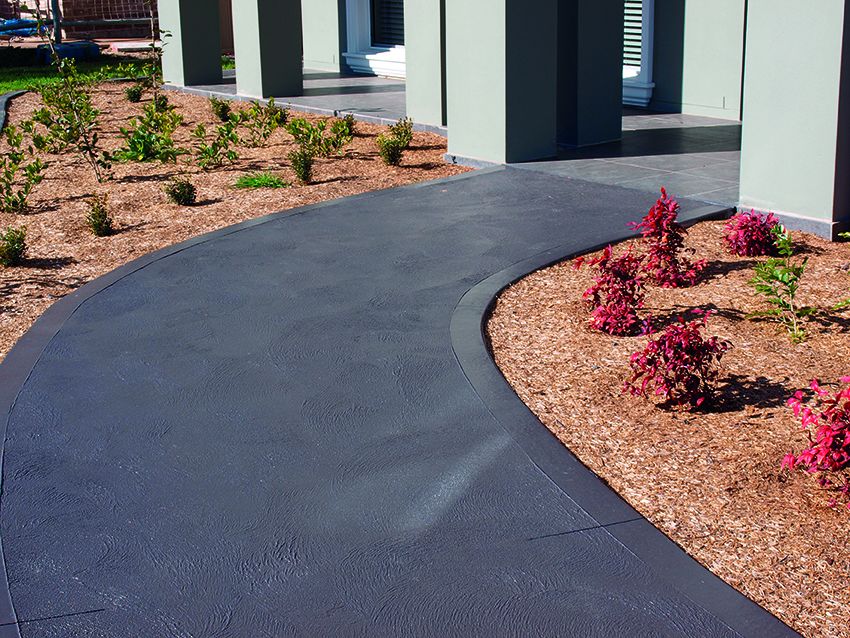
People ask for “the low-smell sealer” or “the tough solvent one” as if those labels alone decide the job. For Dulux Avista systems, water-based and solvent-based sealers both have a place outdoors — and the wrong chemistry indoors is still wrong.
Here is how Rayco thinks about the choice for Perth homes and sites.
Quick comparison
| Solvent acrylic film sealers | Water-based film sealers | |
|---|---|---|
| Typical Avista examples | General Purpose, Extended Wear, Exposed Aggregate, solvent Tintable / Coloured | Waterbased Concrete Sealer (clear); Waterbased Tintable Base (coloured, incl. Colorbond®) |
| Odour during/after job | Strong solvent fumes — exterior use, ventilation, PPE | Low odour; water wash-up |
| VOC (order of magnitude) | High (hundreds of g/L on Dulux data for solvent acrylics) | Low (clear WB ~41 g/L on TDS; Green Star contribution claim on clear WB TDS) |
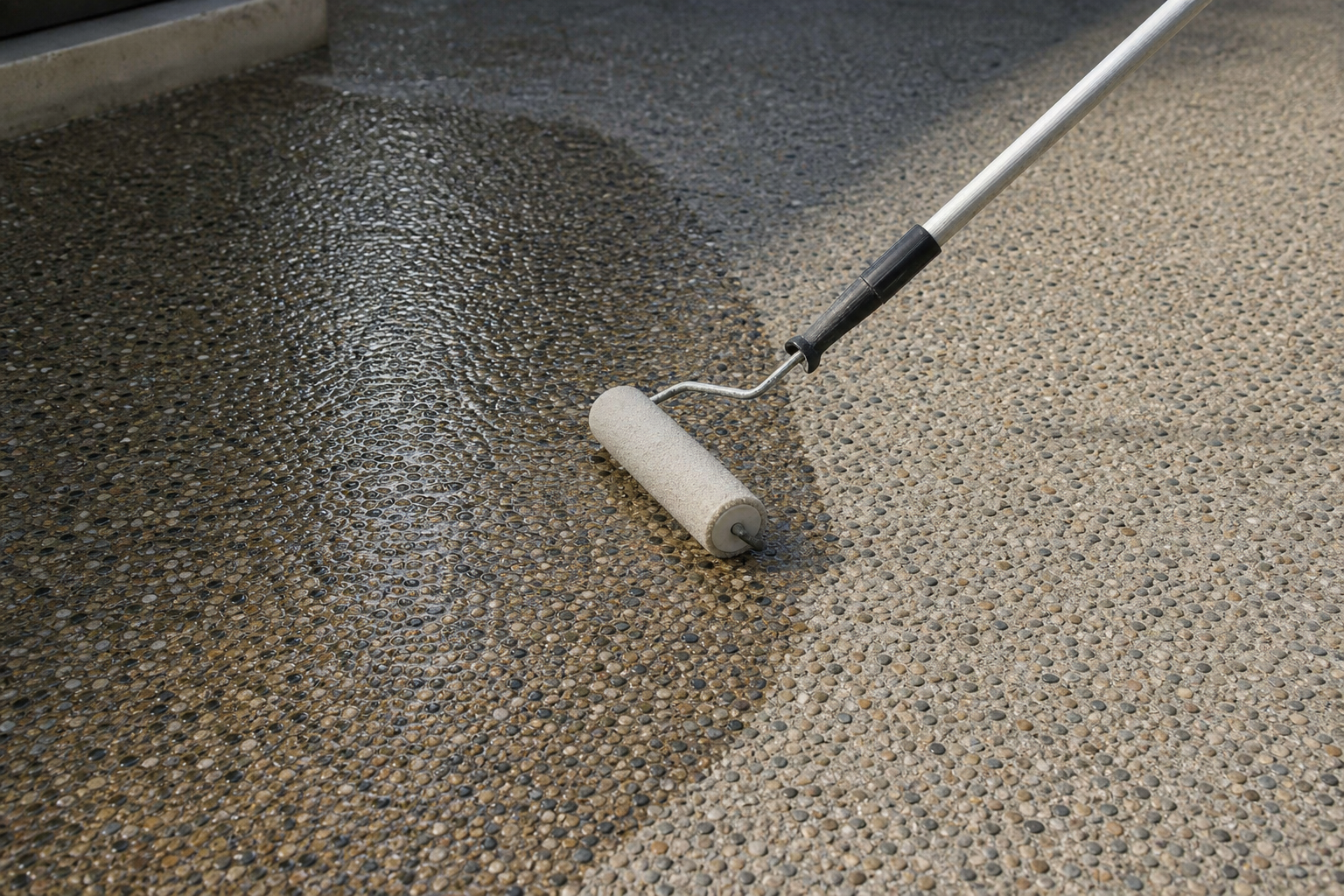
| Classic look | Strong wet-look enhancement common on solvent clears | Clear WB marketed for a more natural look; tintable WB is matt colour |
| Where Dulux points them | Exterior decorative concrete / pavers (GP / EW / Exp Agg = not garage/internal floors) | Clear and tintable: interior and exterior after assessment |
| Primers | Often no primer on suitable bare exterior concrete | Coloured WB system uses Bare Concrete / Sealed Surface primers as applicable |
Neither family is a waterproofing membrane. See are concrete sealers waterproof?.
When Rayco picks solvent acrylic outdoors
Solvent acrylics remain the everyday trade choice for many Perth driveways, paths and decorative exterior slabs because they:
- Deliver the wet-look many clients expect on clear sealing
- Include purpose products for exposed aggregate and petrol-mark resistance (Extended Wear)
- Fit established prep and reseal cycles (~2 years inspect/refresh, wear dependent)
We use them when the site is open air, neighbours and occupants can manage short-term odour, and Dulux’s exterior specification matches the surface.
We do not stretch solvent acrylic driveway sealers into garages. That is a coating conversation: Waterbased Epoxy ± urethane / polyaspartic / polyurethane — covered in garage floor vs driveway sealer.
When Rayco picks water-based outdoors
Water-based Avista options earn their keep when:
- Odour matters — courtyard jobs against living spaces, sensitive neighbours, or clients who want water wash-up
- You want a clearer / more natural look rather than a heavy wet film (Waterbased Concrete Sealer)
- You want Colorbond®-matched colour via Waterbased Tintable Base (24 colours including Colorbond®) with the correct primers — see Colorbond® coloured sealers
- Selected interior-adjacent areas suit a water-based film after moisture and use assessment
Waterbased Tintable Base also notes application on a damp surface is possible provided there is no pooled water — useful nuance in Perth’s weather windows, still not a licence to seal soaking slabs.
Finish and performance — honest limits
- Solvent clears often read “richer” and wetter on textured decorative concrete.
- Water-based clear leans natural and low odour; Dulux cites good marking resistance, not the same petrol-resistance positioning as Extended Wear.
- Coloured systems (solvent tintable vs water-based tintable) are different stacks — primers, sheen and colour library differ. Colorbond® matching for Avista trade coloured work sits with Waterbased Tintable Base, not the solvent coloured line.
If the real need is heavy garage chemicals and hot-tyre traffic, neither “light” outdoor acrylic film is the answer — move to the epoxy flooring / interior floor system.
Slip, slope and shared rules
Film sealers — water or solvent — can reduce slip resistance. Dulux guidance is consistent: do not rely on film sealers on slopes steeper than about 1:8, even with slip additive. Stairs and entries get their own grip plan: non-slip on stairs and entries.
Do not seal damp concrete (whitening risk), over paint without removal, or as a membrane.
How we decide on site
- Exterior vs garage/internal
- Clear wet-look vs natural vs coloured
- Odour / VOC sensitivity
- Traffic and staining history (petrol → Extended Wear conversation)
- Existing sealer chemistry (Xylene / adhesion tests before overcoating)
Sealing vs coating vs resurfacing sits behind that choice if the slab’s look or condition is the bigger issue.
Next step
If you care about smell, look and longevity equally, say so up front. We will specify solvent or water-based Dulux Avista systems that fit the slab — not a single can stretched to every job.
Enquire about sealing and coating
Product names and guidance reflect Dulux Avista Australian product literature. Final specification is always confirmed on site for your concrete and conditions.
Related reading: Sealing vs coating vs resurfacing · Garage floor vs driveway sealer · Are concrete sealers waterproof? · Clear sealer for exposed aggregate · All sealing & coating articles
Comments (0)
No comments yet. Be the first to share your thoughts!